.svg)
Do you trust your planning?
pacemaker.ai generates forecasts based on your sales history, your planners' expertise, and external factors. This results in 10% higher forecast accuracy compared to traditional methods.
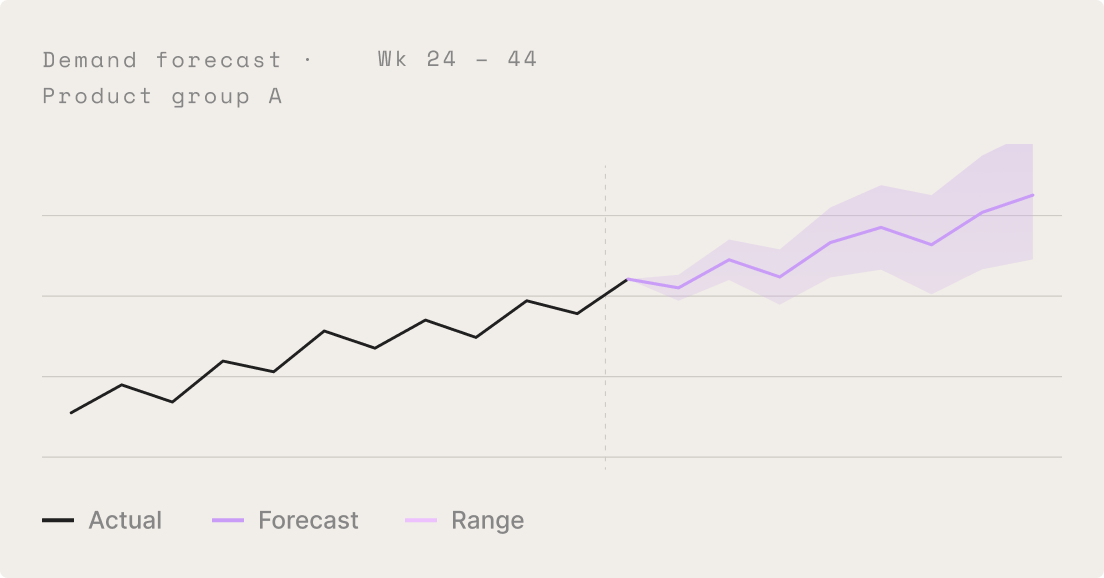
Numbers alone don't make a forecast you can trust.
This is how accurate a forecast can be.
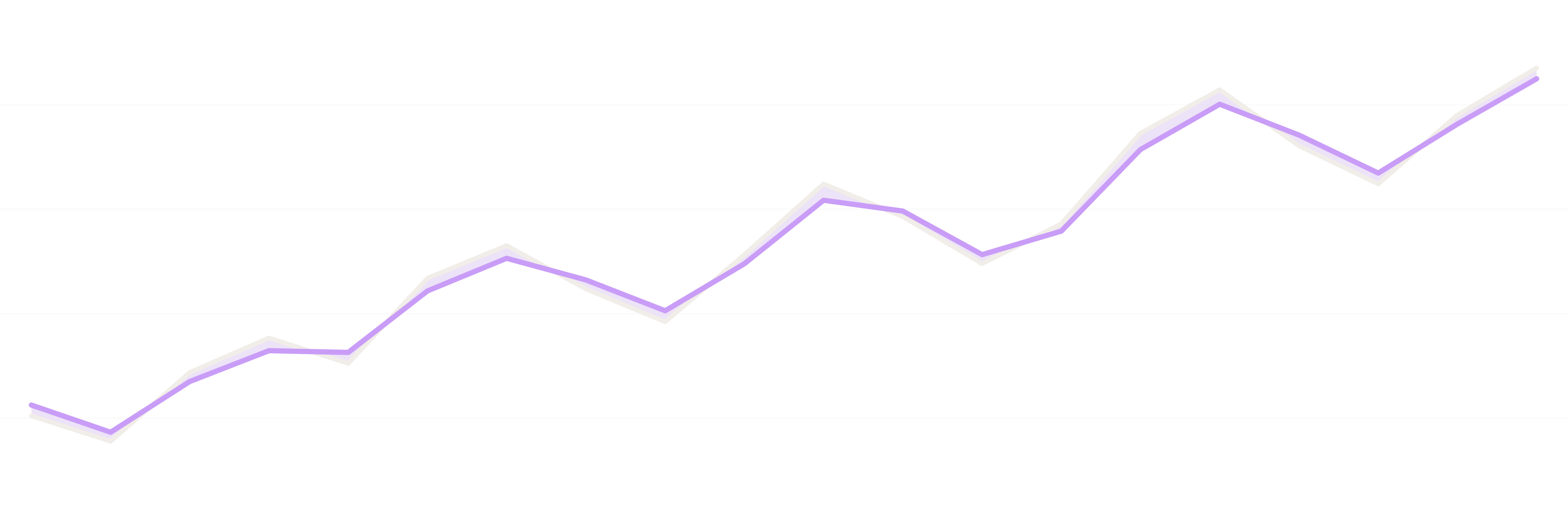
Same assortment, same history, two forecasting methods. The purple area is the gap between forecast and actual sales. That gap has a price. Today you pay it in safety stock or in stockouts.
.png)
All relevant data flows into one forecast that lands directly in your system.
We use the data you already have and build on your existing system landscape. That keeps implementation lean and the effort low.
Sales and inventory data from your ERP system, at item level and spanning the time period covered by your systems.
.svg)
Seasonality, calendar effects, and everything else that moves your sales but never shows up in historical sales data.
.svg)
Promotions, tenders, one-off effects. Everything your team knows but the data doesn't reflect.

The models recalculate the moment new data arrives. Your team keeps working in the ERP. Same process, better numbers. Replenishment Decision Intelligence takes it one step further and converts each forecast into concrete order proposals.
Features your planners actually use every day.
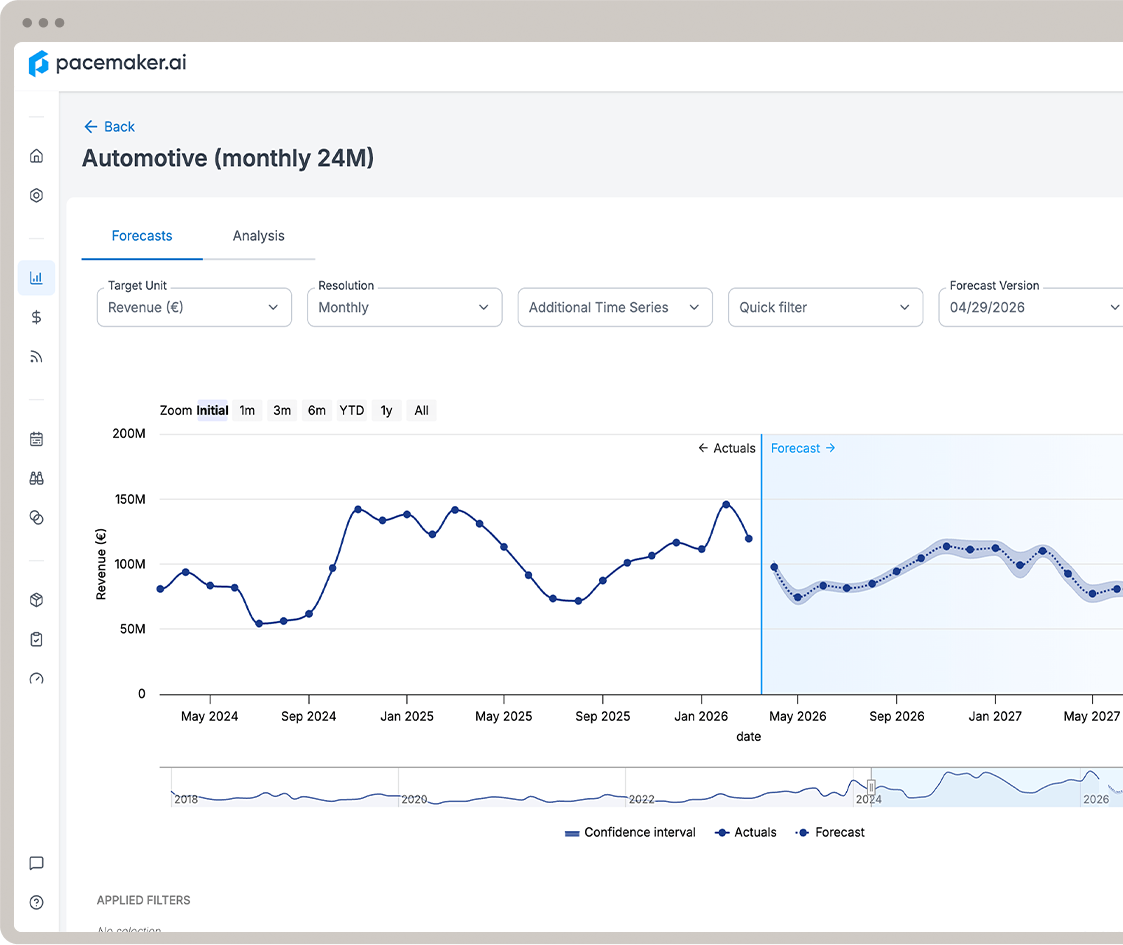
The software takes over the repetitive work, makes the reasoning visible, and gives your team a reliable foundation for making better decisions.
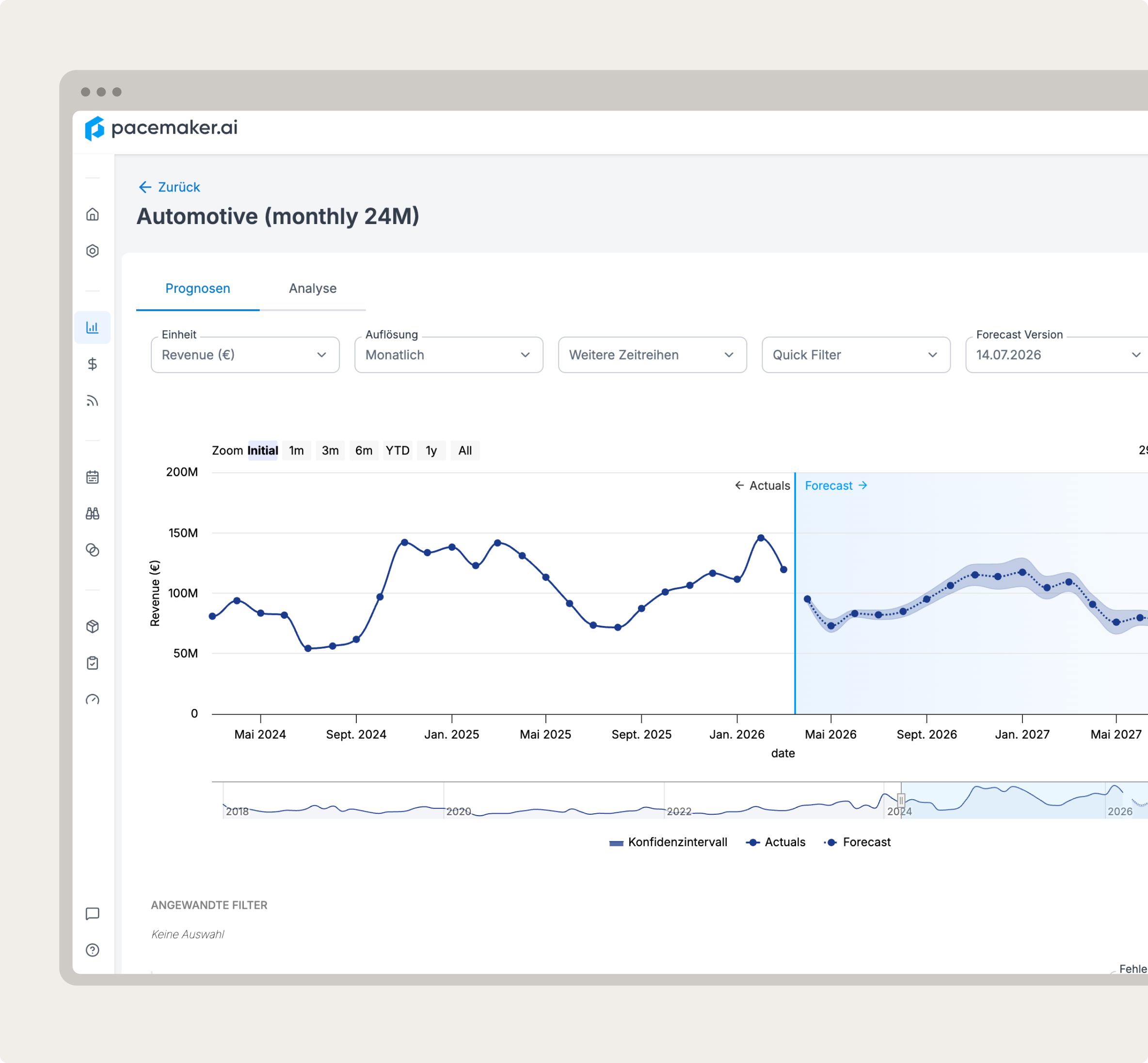
- Fully automated runs instead of manual updates
- Consistent forecast quality across the entire assortment
- No model maintenance for your planning team
.png)
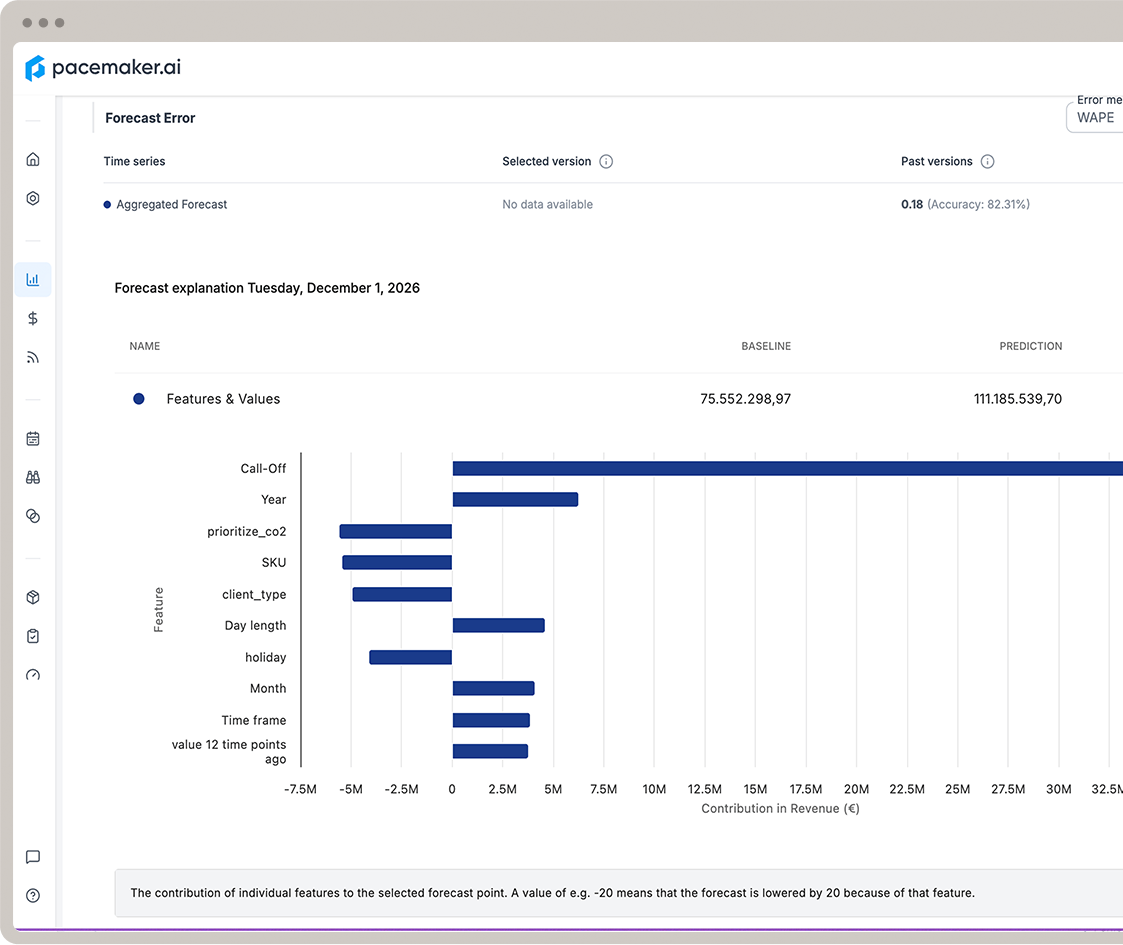
- Factor contributions per forecast value
- Transparent reasoning instead of a black box
- A basis for discussions with Sales and Purchasing
.png)
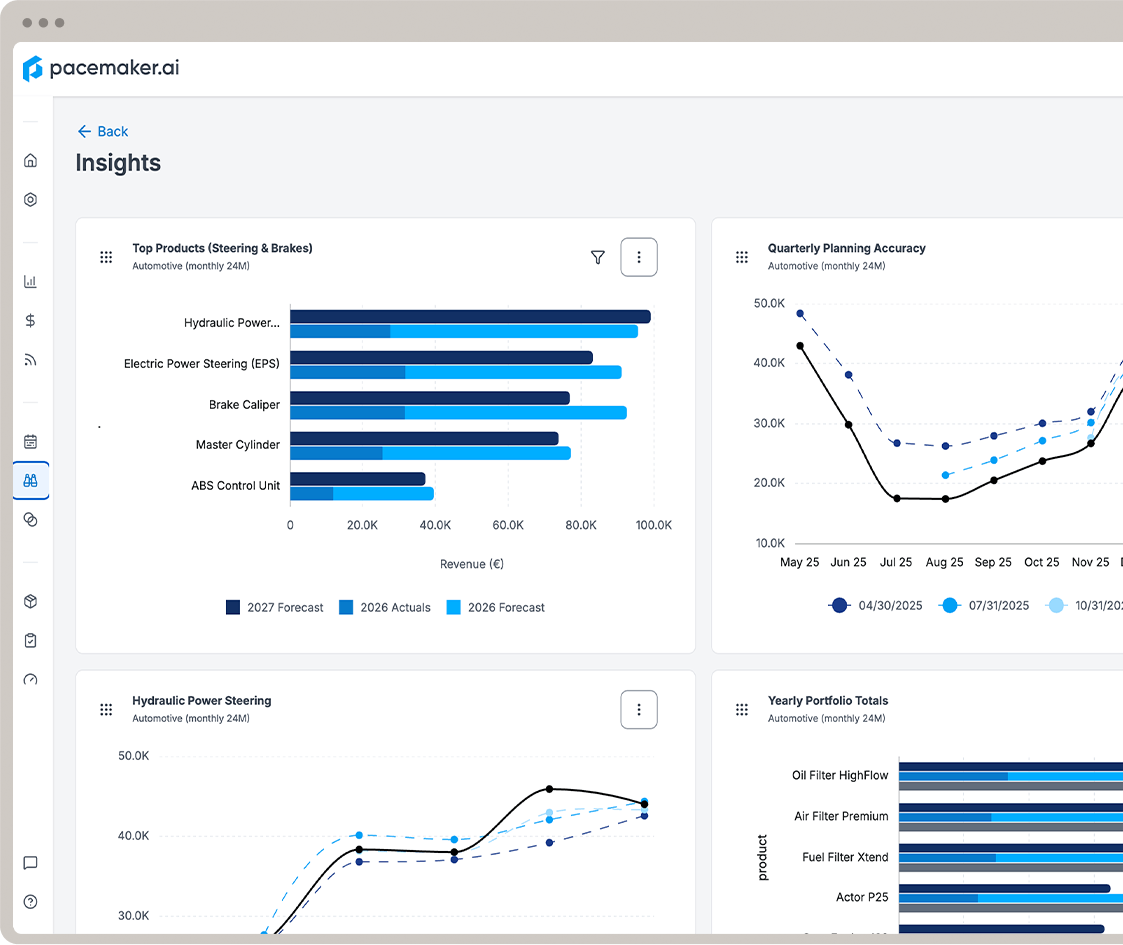
- Customized Analyses of Forecast Accuracy
- Comparison Across Multiple Planning Horizons
- Year-over-Year Comparisons and Portfolio Overviews
.png)
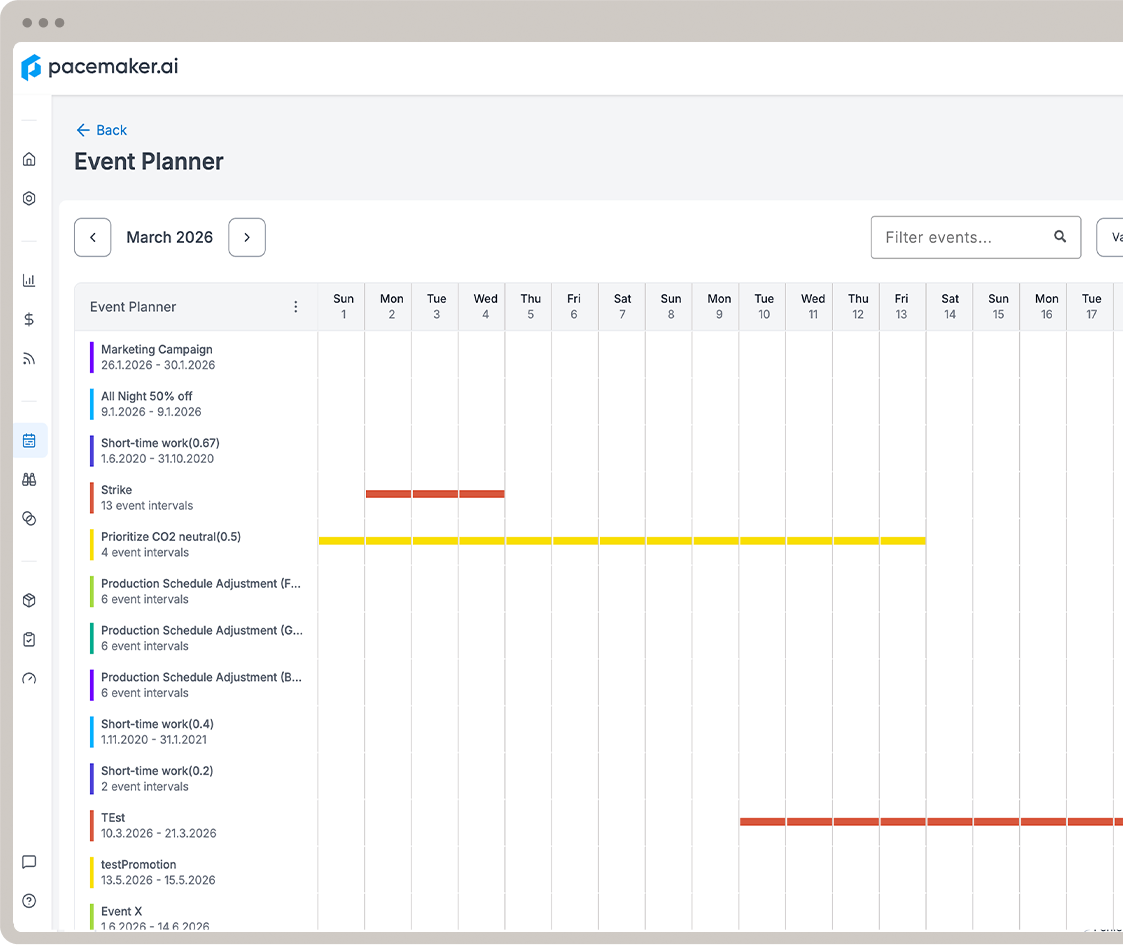
- Manually Add Campaigns and Special Events
- Set up recurring actions once
- Impact Immediately Visible in the Forecast
A forecast that everyone agrees on.
The AI forecast provides the numbers. Through the consensus process, these numbers are used to develop a shared target that sales, planning, and management all support. The forecast thus becomes a common foundation for informed decisions in the S&OP process.
The sales department assesses the expected demand and supplements it with its perspective on the market and customers. This creates a shared understanding that serves as the basis for further planning.
Procurement and inventory are based on joint planning. Changes are immediately visible to everyone. This ensures that Sales, Supply Chain, and Management are always working with the same information.
In executive S&OP, management makes the final decisions and signs off on the plan. Because everyone works from the same data, the focus is on decisions rather than debates about the numbers.
All functions work from the same version. Reconciling Excel files is no longer needed, because only one version exists.
Each planning cycle comes with an optimistic, a realistic, and a conservative scenario.
The session no longer starts with a comparison of the numbers, it starts with a discussion of the variances. That cuts alignment effort significantly.
An accurate forecast pays off in four places at once
Measured against traditional methods, across the entire assortment, not just the fast movers.
.svg)
The smaller the forecast error, the less coverage safety stock has to provide. Working capital benefits directly.

Demand peaks become visible earlier. Potential shortages surface in time to act.
Forecasts are generated automatically rather than built in spreadsheets. Your team discusses variances instead of maintaining formulas.
Used by leading supply chain teams.
How other teams use our software to improve their supply chains.


.svg)
From first conversation to a live forecast in 14 days
Getting started is simple. After a short scoping call, we can move straight into onboarding.
After a brief scoping meeting, we can get started right away with onboarding.
Questions about Demand Forecasting
In 30 minutes, we'll answer your questions and review your use case together.
Still have questions? Get in touch!
Demand forecasting predicts future requirements at the item level. Machine learning models evaluate internal sales and inventory data together with external influencing factors. The result is a demand forecast that helps you avoid excess inventory and supply shortages.
Our forecasts improve accuracy by an average of more than 10 percent compared to traditional methods. The extent of this improvement in your case depends on your product assortment, data quality, and demand patterns. That is why we compare the results with your own historical data before implementation.
Yes. Forecast Explanations show which factors influence each forecast value. Your planners see not only the number but also its drivers, and they keep decision authority.
In three phases: a Data Thinking Workshop to review the use case and data foundation, onboarding with first forecasts based on your numbers, then the transition into regular operation. At Eberspächer, five weeks passed between kickoff and go-live.
Yes. Replenishment Decision Intelligence builds on the demand forecasts and translates them into order quantities, safety stock, and reorder points per item and location. Commodity Price Forecasting adds raw material prices to the procurement perspective.
Pricing depends on company size, scope of use, and forecast complexity. In an initial conversation, we look at your case and give you a reliable ballpark.