.svg)
How Logistik Schmitt makes the emissions benefits of its electric truck fleet transparent for customers
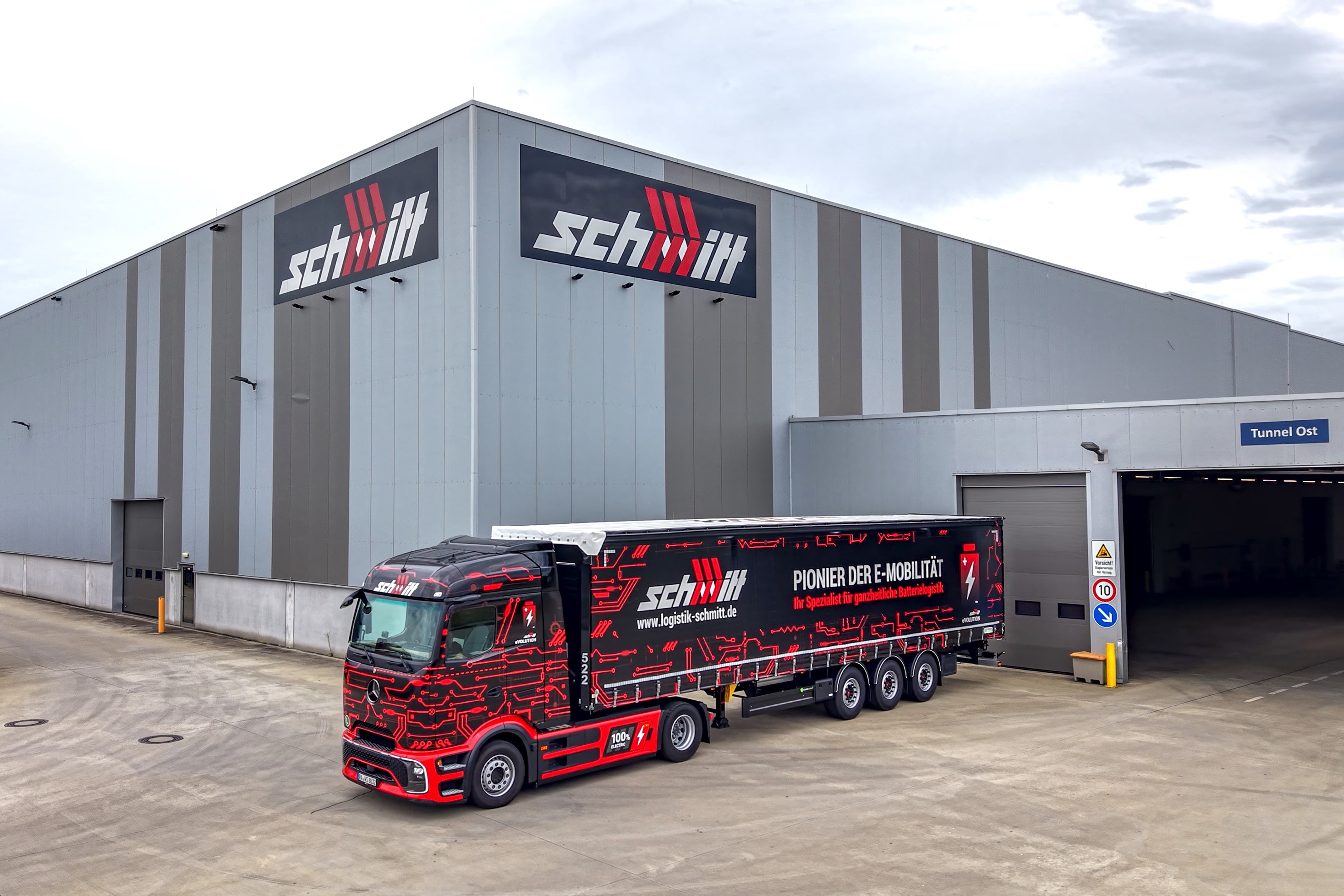
With more than 50 electric trucks, Logistik Schmitt operates one of the largest electric truck fleets in Germany and is one of the pioneers of electric mobility in road freight transport. For clients such as Schaeffler, the trucks have long been running electric. Now, the resulting CO₂ reductions are to be made visible in the form of documented proof. As the technology partner, pacemaker.ai makes the CO₂ savings compared to a diesel journey verifiable for every shipment.
Initial situation
Logistik Schmitt invested in electric mobility early on, long before low-emission transport became a fixed component of tenders. With the growing demand for more climate-friendly transport, however, the requirements for transparency and verifiability grew as well.
At first, conversations with customers focused mainly on the technology. How can electric mobility be used in heavy-duty transport? Later, further questions followed. How much CO₂ do the electric transports actually save? With the rising requirements for sustainability reports and ESG metrics, reducing emissions is no longer enough today. The savings need to be documented in a way that is transparent, traceable, and robust.
From field-testing partner to electrified fleet
Logistik Schmitt's experience with electric trucks goes back to the early days of the eActros. The fully electric truck from Daimler Truck was developed specifically for heavy-duty distribution and long-haul transport. Out of the long-standing collaboration with the manufacturer, Logistik Schmitt was selected as a field-testing partner. From the first eActros to today's eActros 600, Logistik Schmitt has electrified its fleet step by step, building up extensive hands-on experience in electric heavy-duty transport along the way.
Transparency at shipment level
Together with pacemaker.ai, Logistik Schmitt's transport emissions are calculated automatically at shipment level, meaning for each individual delivery rather than as a flat average. The calculation runs through the Transport Emissions module of pacemaker.ai's Sustainability Management Platform, in accordance with the GLEC v3 and ISO 14083 standards. The underlying methodology is TÜV-certified.
This makes the actual emissions of a transport visible, along with the savings compared to conventional diesel-powered journeys. Based on the primary data from the electric trucks, the emissions reduction for 2025 adds up to 157 tonnes of CO₂e, an average of around 875 kilograms per transport.
What transparent data means in the transport industry
For shippers, what counts is being able to substantiate sustainability. Transparent emissions data creates the objective basis for comparing transports and backing investments with robust figures.
Across the entire automotive supply chain, sustainability is also being approached in an increasingly professional and data-driven way. Where cost, quality, and delivery reliability used to be the main focus, CO₂ emissions are now a fixed part of tenders, supplier evaluations, and strategic decisions. Flat averages are less and less sufficient. What is needed is transport-specific, verifiable proof.
Why the investment in green logistics pays off
The early move into electric mobility in transport is paying off for Logistik Schmitt on several levels. When diesel prices rose sharply as a result of the war in Ukraine, Logistik Schmitt was already running part of its fleet on self-generated solar power and at predictable electricity prices. An electric truck does cost 2.5 to 3 times as much to purchase as a comparable diesel truck. However, funding programs in the early phase and the current toll exemption for electric trucks in Germany create a clear economic advantage. On individual routes that were previously under high cost pressure, this makes the company competitive again.
The investment has paid off not only economically. Today, Logistik Schmitt can offer clients transport solutions that have already proven themselves in electric heavy-duty transport. Together with pacemaker.ai, this advantage becomes tangible for customers through the verifiable reduction in emissions.


This project shows how the benefits of electric transport can be made usable for customers at scale, through reliable emissions data, clear standards, and transparent communication.

Photo: Matthias Rathmann
Outlook
Through the collaboration between Logistik Schmitt and pacemaker.ai, Schaeffler receives robust, transparent emissions documentation for its transports and can use it for its own sustainability targets and reporting requirements. At the same time, the contribution that Logistik Schmitt's investment in electric mobility makes to reducing emissions becomes visible.
The more clients include transport-specific emissions data in their reporting and award decisions, the greater the benefit of making the advantages of electric transport available beyond individual routes. pacemaker.ai's solution grows with the fleet and with demand. Mechanisms such as Book & Claim could open up next steps here.

Arrange your initial consultation now
Regardless of where you currently stand. Our team will be happy to provide you with a free initial consultation. In just under 30 minutes, we will look at your challenges and our solution together.